
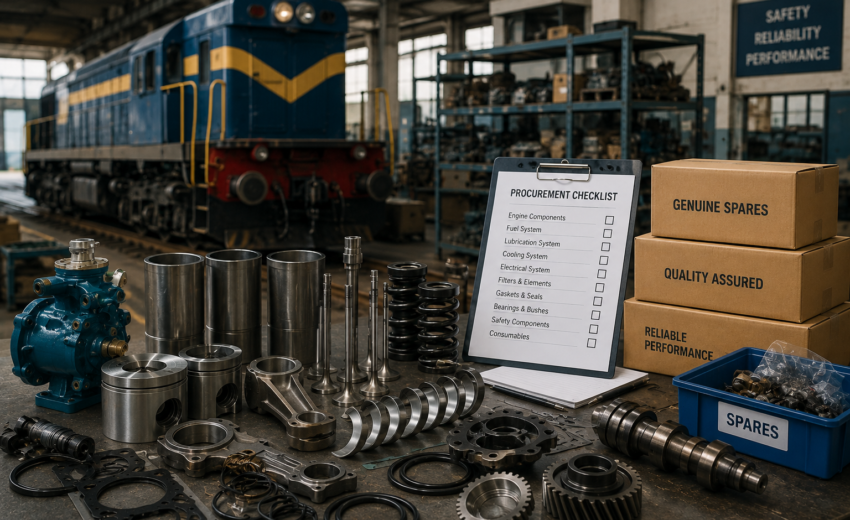
Railway maintenance workshops play a critical role in ensuring the reliability, safety, and efficiency of locomotive fleets. Whether handling routine servicing, major overhauls, or complete rebuild projects, maintenance teams depend on a steady supply of high-quality spare parts to keep locomotives operating at peak performance.
The procurement of Railway Spares is far more than a simple purchasing activity. It involves strategic planning, supplier evaluation, inventory management, quality assurance, and cost control. Selecting the right parts can improve locomotive reliability, extend equipment life, and reduce long-term operating expenses. On the other hand, poor procurement decisions can lead to unexpected failures, prolonged downtime, and costly repairs.
As rail networks continue to expand and locomotive fleets age, maintenance workshops must adopt a structured procurement strategy for Locomotive Spares, Diesel Engine Spares, components for Locomotive Rebuild projects, and specialized parts used in GE Locomotive maintenance.
This comprehensive guide outlines best practices, key considerations, and practical tips for successful railway spare parts procurement.
Why Railway Spares Procurement Matters
Every locomotive contains thousands of components working together under demanding operating conditions. From diesel engines and traction systems to braking equipment and cooling systems, each part contributes to reliable operation.
Effective procurement ensures:
- Continuous fleet availability
- Reduced maintenance delays
- Improved operational reliability
- Better cost management
- Enhanced safety standards
- Longer locomotive service life
For maintenance workshops, the availability of quality Railway Spares directly impacts productivity and operational efficiency.
Understanding Different Categories of Railway Spares
Before developing a procurement strategy, it is important to understand the main categories of spare parts commonly required in railway maintenance operations.
Locomotive Spares
Locomotive Spares include a wide range of mechanical and electrical components used in daily maintenance and repairs.
Examples include:
- Pistons
- Cylinder liners
- Bearings
- Gaskets
- Turbocharger parts
- Filters
- Pumps
- Valves
These components are essential for maintaining locomotive performance and reliability.
Diesel Engine Spares
Diesel-powered locomotives require specialized engine components that operate under extreme conditions.
Common Diesel Engine Spares include:
- Piston ring sets
- Cylinder heads
- Fuel injectors
- Connecting rods
- Crankshaft components
- Oil pumps
- Water pumps
Using high-quality diesel engine components helps maximize fuel efficiency and engine longevity.
GE Locomotive Components
Many railway operators rely on GE Locomotive fleets for freight and passenger transportation.
Maintenance workshops often require:
- Engine components
- Electrical assemblies
- Cooling system parts
- Fuel system equipment
- Turbocharger components
- Traction-related parts
Due to their specialized nature, GE locomotive components should be sourced from trusted suppliers with proven industry expertise.
Locomotive Rebuild Components
A Locomotive Rebuild project involves extensive refurbishment of aging locomotives.
Typical replacement items include:
- Engine overhaul kits
- Cylinder liners
- Pistons
- Bearings
- Cooling system assemblies
- Fuel system components
- Structural hardware
Successful rebuild programs depend on consistent access to quality spare parts.
Key Challenges in Railway Spares Procurement
Maintenance workshops often face several procurement challenges.
Supply Chain Delays
Global supply chain disruptions can affect spare part availability and delivery schedules.
Challenges include:
- Longer lead times
- Shipping delays
- Material shortages
- Production bottlenecks
Maintaining strong supplier relationships helps mitigate these risks.
Counterfeit Components
The railway industry occasionally encounters counterfeit or substandard parts.
Risks include:
- Premature failures
- Reduced performance
- Safety concerns
- Increased maintenance costs
Purchasing from reputable suppliers reduces the likelihood of receiving counterfeit products.
Inventory Management
Maintaining the right inventory balance can be difficult.
Excess inventory ties up capital, while insufficient stock increases downtime risks.
Workshops must carefully monitor inventory levels and consumption trends.
Developing an Effective Procurement Strategy
A structured procurement approach helps maintenance workshops achieve better results.
Identify Critical Components
Begin by identifying parts that have the greatest impact on locomotive availability.
Examples include:
- Cylinder liners
- Piston ring sets
- Bearings
- Fuel injectors
- Turbocharger components
These items should receive priority attention during procurement planning.
Analyze Historical Usage Data
Review maintenance records to determine:
- Frequently replaced components
- Average consumption rates
- Failure trends
- Seasonal demand patterns
Historical data improves forecasting accuracy and inventory planning.
Establish Spare Parts Classification
Categorizing inventory helps streamline procurement activities.
Common categories include:
Fast-Moving Parts
Frequently used components required for routine maintenance.
Critical Parts
Items whose failure can immobilize a locomotive.
Long Lead-Time Parts
Components requiring extended manufacturing or delivery periods.
Rebuild Components
Parts commonly used during major overhaul and rebuild projects.
Quality Considerations When Purchasing Railway Spares
Quality should always be a top priority.
Material Standards
Components must be manufactured using high-quality materials suitable for demanding railway applications.
Benefits include:
- Improved durability
- Better wear resistance
- Extended service life
Manufacturing Precision
Precision-engineered parts ensure:
- Proper fitment
- Reliable operation
- Reduced maintenance requirements
Compliance with Industry Standards
Choose suppliers whose products comply with recognized railway industry specifications and quality standards.
Evaluating Spare Parts Suppliers
Selecting the right supplier is one of the most important procurement decisions.
Industry Experience
Look for suppliers with extensive railway sector expertise.
Experienced suppliers better understand the technical requirements of:
- Railway Spares
- Locomotive Spares
- Diesel Engine Spares
- GE Locomotive components
Product Range
A broad product portfolio simplifies procurement and reduces administrative workload.
Technical Support
Reliable suppliers provide:
- Product guidance
- Technical documentation
- Application support
- Troubleshooting assistance
Consistent Availability
Dependable inventory availability helps prevent maintenance delays.
Procurement Best Practices for Locomotive Rebuild Programs
A Locomotive Rebuild requires careful planning and coordination.
Develop Detailed Parts Lists
Create comprehensive bills of materials before initiating procurement activities.
Procure Early
Long lead-time components should be ordered well in advance.
Standardize Components
Where possible, standardize spare parts across locomotive fleets to simplify inventory management.
Verify Compatibility
Ensure all components meet equipment specifications and operational requirements.
Inventory Management Tips for Maintenance Workshops
Effective inventory management supports successful procurement.
Maintain Safety Stock
Safety stock helps absorb unexpected demand fluctuations.
Use Digital Inventory Systems
Modern inventory software improves:
- Stock visibility
- Forecasting accuracy
- Procurement planning
Conduct Regular Audits
Periodic inventory audits help identify:
- Obsolete stock
- Shortages
- Inventory discrepancies
Cost Optimization Without Sacrificing Quality
Reducing procurement costs should never compromise reliability.
Strategies include:
- Long-term supplier agreements
- Volume purchasing
- Predictive maintenance planning
- Inventory optimization
- Supplier performance monitoring
Quality components often provide lower total ownership costs than cheaper alternatives.
The Importance of Genuine Diesel Engine Spares
Diesel engines are among the most expensive locomotive assets.
Using genuine or OEM-quality Diesel Engine Spares offers several benefits:
- Better engine performance
- Reduced fuel consumption
- Lower maintenance costs
- Increased reliability
- Extended service intervals
These advantages make quality engine components a smart investment.
Procurement Considerations for GE Locomotive Fleets
Maintaining a GE Locomotive fleet requires specialized knowledge and sourcing expertise.
Important considerations include:
- Model-specific compatibility
- Component traceability
- Supplier certifications
- Technical documentation availability
Working with experienced suppliers helps ensure successful procurement outcomes.
Emerging Trends in Railway Spare Parts Procurement
The railway industry is evolving rapidly.
Key trends include:
Predictive Maintenance
Data-driven maintenance programs help forecast spare part requirements more accurately.
Digital Procurement Platforms
Online procurement systems improve efficiency and supplier communication.
Sustainability Initiatives
Many railway operators are adopting environmentally responsible procurement practices.
Global Supplier Networks
Expanded supplier networks provide greater flexibility and resilience.
Why Choose Indo German Industries?
Indo German Industries is a trusted partner for railway operators and maintenance workshops seeking reliable spare parts solutions.
The company offers:
- Railway Spares
- Locomotive Spares
- Diesel Engine Spares
- GE Locomotive components
- Parts for Locomotive Rebuild projects
Key strengths include:
Proven Industry Expertise
Extensive experience supporting railway maintenance operations.
High-Quality Products
Components manufactured to meet demanding industry standards.
Reliable Supply Chain
Consistent availability of critical spare parts.
Customer-Centric Support
Dedicated assistance for maintenance workshops and procurement teams.
Learn more at:
https://indogermanind.com/
Frequently Asked Questions (FAQs)
Why is Railway Spares procurement important?
Proper procurement ensures locomotive reliability, minimizes downtime, and supports efficient maintenance operations.
What are the most critical Locomotive Spares?
Common critical components include cylinder liners, piston ring sets, bearings, injectors, pumps, and turbocharger parts.
How can maintenance workshops avoid counterfeit spare parts?
Purchase only from reputable suppliers with proven industry experience and strong quality assurance practices.
Why are quality Diesel Engine Spares important?
High-quality engine components improve performance, reduce maintenance costs, and extend engine life.
What should be considered during a Locomotive Rebuild?
Workshops should focus on compatibility, quality, supplier reliability, inventory planning, and timely procurement of critical components.
Are GE Locomotive spare parts different from other locomotive components?
Yes. GE locomotive systems often require model-specific components designed to meet unique operational and technical requirements.
Final Thoughts
Efficient procurement of Railway Spares is a cornerstone of successful locomotive maintenance operations. From routine servicing to large-scale Locomotive Rebuild projects, maintenance workshops must balance quality, availability, and cost while ensuring reliable fleet performance.
By implementing structured procurement strategies, maintaining strong supplier partnerships, and prioritizing premium Locomotive Spares, Diesel Engine Spares, and GE Locomotive components, railway operators can significantly reduce downtime, improve reliability, and maximize the return on their maintenance investments.
As railway systems continue to evolve, workshops that adopt proactive procurement practices will be best positioned to support safe, efficient, and dependable rail operations for years to come.
