
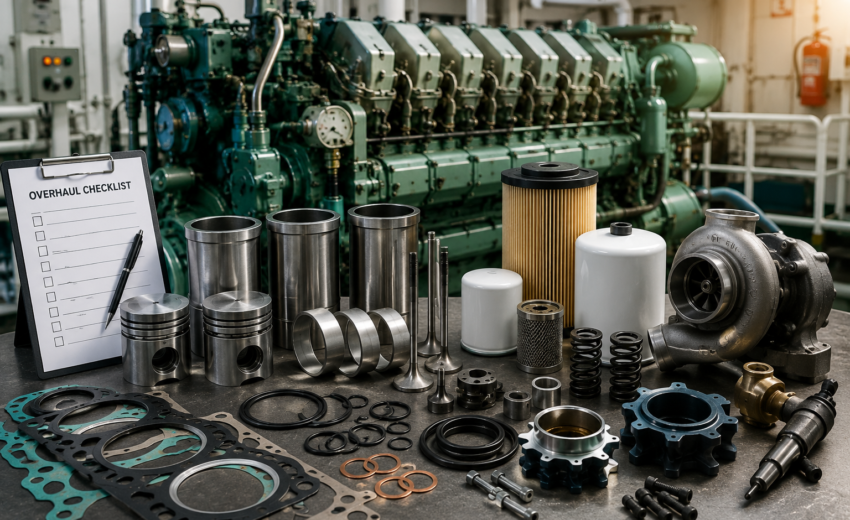
Marine engines operate in some of the most demanding environments in the world. Whether powering cargo vessels, fishing boats, offshore support ships, or marine generators, these engines must withstand continuous operation, heavy loads, temperature fluctuations, and harsh sea conditions. Over time, even the most reliable engines experience wear and tear, making periodic maintenance and overhaul essential.
An Engine Overhaul is one of the most important maintenance activities for ensuring engine reliability, fuel efficiency, and long-term operational performance. However, the success of an overhaul depends largely on the quality and completeness of the replacement parts used during the process.
Ignoring critical Marine Spares can result in unexpected failures, reduced engine performance, and expensive downtime. That’s why maintenance teams and vessel operators must follow a comprehensive overhaul checklist that covers all major wear components.
In this article, we’ll explore the essential marine engine overhaul checklist and highlight the Diesel Engine Spares, Piston Ring Set, Cylinder Liner, and other critical components that should never be overlooked.
What Is a Marine Engine Overhaul?
A marine engine overhaul is a planned maintenance procedure that involves inspecting, repairing, refurbishing, or replacing worn engine components to restore performance and reliability.
The primary goals of an overhaul include:
- Restoring engine efficiency
- Preventing unexpected breakdowns
- Extending engine lifespan
- Reducing fuel consumption
- Improving operational safety
- Minimizing maintenance costs
Depending on engine condition and operating hours, overhauls may range from minor servicing to complete engine rebuilding.
Why Marine Spares Matter During an Engine Overhaul
Every component inside a marine diesel engine works together to deliver power efficiently. Even a small worn part can affect overall engine performance.
Using high-quality Marine Spares offers several benefits:
- Improved engine reliability
- Longer service intervals
- Better fuel economy
- Reduced downtime
- Enhanced operational safety
- Lower lifecycle costs
Investing in quality replacement parts during an overhaul often saves significant repair costs in the future.
Essential Marine Engine Overhaul Checklist
1. Piston Ring Set Inspection and Replacement
One of the most critical components to inspect during an overhaul is the Piston Ring Set.
Piston rings perform several important functions:
- Maintain cylinder compression
- Control lubricating oil consumption
- Transfer heat from the piston
- Prevent combustion gas leakage
Over time, piston rings wear due to friction, heat, and pressure.
Signs of Worn Piston Rings
- Increased oil consumption
- Reduced engine power
- Excessive exhaust smoke
- High crankcase pressure
- Lower compression readings
Replacing a worn Piston Ring Set during an overhaul helps restore engine performance and efficiency.
2. Cylinder Liner Assessment
The Cylinder Liner forms the inner wall of the combustion chamber and provides the running surface for the piston rings.
Since liners are continuously exposed to friction and combustion heat, they are among the most commonly replaced Diesel Engine Spares during overhauls.
Common Cylinder Liner Problems
- Abrasive wear
- Corrosion
- Scuffing
- Cracking
- Cavitation damage
Inspection Checklist
- Measure liner wear
- Check for scoring marks
- Inspect for cracks
- Verify liner roundness
- Examine surface finish
Replacing damaged liners prevents performance loss and protects other engine components.
3. Pistons and Piston Grooves
Pistons should be carefully inspected for:
- Cracks
- Carbon deposits
- Excessive wear
- Distorted piston grooves
Damaged pistons can affect combustion efficiency and increase fuel consumption.
During a major Engine Overhaul, replacing worn pistons often improves overall engine reliability.
4. Cylinder Head Components
Cylinder heads endure extreme temperatures and pressure.
Inspect the following:
- Cylinder head surface
- Valve seats
- Valve guides
- Exhaust valves
- Intake valves
Any signs of cracking, erosion, or excessive wear should be addressed immediately.
Fuel System Components You Cannot Ignore
5. Fuel Injectors
Fuel injectors play a critical role in combustion efficiency.
Worn injectors can cause:
- Poor fuel atomization
- Increased fuel consumption
- Engine knocking
- Excessive emissions
Injector testing and replacement are essential during a marine overhaul.
6. Fuel Pumps
Fuel pumps must deliver consistent pressure for proper engine operation.
Inspect for:
- Leakage
- Pressure irregularities
- Wear on moving parts
Replacing worn pumps helps maintain optimal fuel delivery.
Lubrication System Components
7. Oil Pumps
The oil pump ensures adequate lubrication throughout the engine.
A failing oil pump can lead to:
- Bearing damage
- Excessive wear
- Engine seizure
Inspect oil pumps thoroughly and replace if wear exceeds acceptable limits.
8. Oil Filters
Fresh filters are a must during every overhaul.
Benefits include:
- Cleaner lubrication
- Reduced contamination
- Improved engine protection
High-quality Marine Spares include premium filtration components designed for marine environments.
Cooling System Components
9. Water Pumps
Cooling system reliability is critical for marine engines.
Inspect water pumps for:
- Impeller damage
- Leakage
- Bearing wear
- Reduced flow rates
A faulty water pump can quickly lead to overheating.
10. Heat Exchangers
Marine engines depend on heat exchangers to regulate operating temperatures.
Inspect for:
- Corrosion
- Scale buildup
- Blockages
- Leakage
Cleaning or replacing damaged units ensures efficient cooling performance.
Bearings and Bushings
11. Main Bearings
Main bearings support the crankshaft and absorb engine loads.
Inspect for:
- Scoring
- Wear patterns
- Fatigue damage
- Corrosion
Bearing replacement is a common requirement during a major Engine Overhaul.
12. Connecting Rod Bearings
Connecting rod bearings operate under tremendous stress.
Replacing worn bearings reduces the risk of catastrophic engine failure.
Crankshaft Inspection
13. Crankshaft Evaluation
The crankshaft is one of the most expensive engine components.
Inspection should include:
- Journal measurements
- Crack detection
- Surface condition assessment
- Alignment checks
Any signs of excessive wear should be addressed before reassembly.
Gaskets and Sealing Components
14. Complete Gasket Kit
Gaskets are often inexpensive but critically important.
Replace:
- Cylinder head gaskets
- Manifold gaskets
- Oil pan gaskets
- Water pump gaskets
New seals help prevent leaks and maintain engine integrity.
15. O-Rings and Seals
Never reuse worn sealing components during an overhaul.
Fresh seals help prevent:
- Oil leaks
- Coolant leaks
- Pressure loss
Turbocharger Components
16. Turbocharger Inspection
Turbochargers improve engine power and fuel efficiency.
Inspect for:
- Shaft play
- Blade damage
- Oil leakage
- Carbon buildup
Servicing or replacing turbocharger components can significantly improve engine performance.
Air Intake System Components
17. Air Filters
Clean air is essential for efficient combustion.
Replace air filters to:
- Improve airflow
- Reduce engine wear
- Increase fuel efficiency
Contaminated air is a major cause of premature engine wear.
Electrical Components
18. Sensors and Monitoring Devices
Modern marine engines rely on sensors for performance monitoring.
Check:
- Temperature sensors
- Pressure sensors
- Speed sensors
- Alarm systems
Reliable instrumentation supports safe vessel operation.
Benefits of Using Quality Diesel Engine Spares
Choosing premium Diesel Engine Spares offers long-term advantages:
Improved Reliability
High-quality components perform consistently under demanding operating conditions.
Reduced Maintenance Costs
Durable parts require fewer replacements and repairs.
Better Fuel Economy
Efficient engine operation lowers fuel consumption.
Longer Engine Life
Quality components reduce wear and extend service intervals.
Common Mistakes During an Engine Overhaul
Avoid these common errors:
- Reusing worn components
- Ignoring manufacturer specifications
- Using low-quality replacement parts
- Skipping inspections
- Failing to measure wear accurately
- Neglecting cooling system maintenance
A thorough overhaul process helps prevent these costly mistakes.
Selecting the Right Marine Spares Supplier
When sourcing Marine Spares, consider:
Product Quality
Choose components manufactured to recognized industry standards.
Technical Expertise
Work with suppliers who understand marine engine applications.
Availability
Ensure critical parts are readily available when needed.
Proven Reliability
Select suppliers with a strong reputation for delivering dependable products.
Marine Engine Overhaul Best Practices
To achieve the best results:
- Follow the manufacturer’s overhaul schedule.
- Use genuine or OEM-quality parts.
- Replace wear components proactively.
- Maintain detailed maintenance records.
- Conduct performance testing after reassembly.
- Train maintenance personnel regularly.
These practices improve engine reliability and reduce lifecycle costs.
Frequently Asked Questions (FAQs)
How often should a marine engine undergo an overhaul?
The overhaul interval depends on engine type, operating hours, and manufacturer recommendations. Regular inspections help determine the appropriate timing.
Why is a Piston Ring Set important during an overhaul?
The Piston Ring Set maintains compression, controls oil consumption, and improves combustion efficiency.
When should a Cylinder Liner be replaced?
A Cylinder Liner should be replaced if it shows excessive wear, scoring, corrosion, or dimensional deviations beyond acceptable limits.
What are the most important Diesel Engine Spares for a marine overhaul?
Critical components include piston rings, cylinder liners, bearings, injectors, pumps, seals, and gaskets.
Can quality Marine Spares reduce maintenance costs?
Yes. Premium parts typically last longer, perform better, and reduce the likelihood of unexpected failures.
Final Thoughts
A successful Engine Overhaul is much more than simply replacing a few worn components. It requires a comprehensive inspection process, accurate measurements, and the use of high-quality Marine Spares that can withstand the demanding conditions of marine operations.
From the Piston Ring Set and Cylinder Liner to bearings, injectors, pumps, and sealing components, every part plays a vital role in engine reliability and efficiency. Overlooking even a minor component can lead to reduced performance, higher fuel costs, and unplanned downtime.
By following a structured overhaul checklist and investing in premium Diesel Engine Spares, vessel operators can maximize engine life, improve operational reliability, and ensure smooth sailing for years to come.
